


The set of rights  can be broken into two subsets :
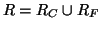 where
where  is the set of capabilities and
  is the set of
permissions that can be given to a file, for each possible uid. Let
is the set of
permissions that can be given to a file, for each possible uid. Let
 be the set of available uids plus a special element that will mean
that the uid check is not needed. Let
be the set of available uids plus a special element that will mean
that the uid check is not needed. Let  be the set of capabilities
seen in section
be the set of capabilities
seen in section ![[*]](/usr/share/latex2html/icons/crossref.png) . Let
. Let
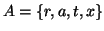 be the set
of file accesses.
be the set
of file accesses.
We can write
 and
and
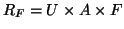 .
Thus an insight of could be the union of the two following tables
where each row is an element of .
Let's have a very reduced disk with three files :
.
Thus an insight of could be the union of the two following tables
where each row is an element of .
Let's have a very reduced disk with three files :  /
/ /bin//bin/vi
 ,
and
,
and
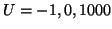 (no uid test, id=root and first user).
| -1 | CAP_CHOWN |
| 0 | CAP_CHOWN |
| 1000 | CAP_CHOWN |
| -1 | CAP_DAC_OVERRIDE |
| 0 | CAP_DAC_OVERRIDE |
| 1000 | CAP_DAC_OVERRIDE |
| ... | ... |
| -1 | LIDS_OUTLAW |
| 0 | LIDS_OUTLAW |
| 1000 | LIDS_OUTLAW |
| -1 | r | / |
| 0 | r | / |
| 1000 | r | / |
| -1 | a | / |
| 0 | a | / |
| 1000 | a | / |
| -1 | t | / |
| 0 | t | / |
| 1000 | t | / |
| -1 | x | / |
| 0 | x | / |
| 1000 | x | / |
| -1 | r | /bin/ |
| 0 | r | /bin/ |
| 1000 | r | /bin/ |
| ... | ... | ... |
| 1000 | x | /bin/vi |